I may earn a commission at no extra cost to you. #ad
Dealers vs. Private Buyers: How to Negotiate the Best Price for Large Silver Portfolios
Jump to Section
Liquidating a significant silver portfolio is a high-stakes endeavor. Whether you are divesting a multi-generational collection or liquidating an investment position, the gap between a "good" price and a "great" price can amount to thousands of dollars. The primary dilemma every seller faces is choosing between the professional efficiency of a bullion dealer and the potentially higher margins of a private buyer. This guide explores the nuances of both paths and provides actionable negotiation tactics to ensure you leave nothing on the table.
Understanding the Silver Market Dynamics
Before entering any negotiation, you must understand how silver is priced. The foundation is the "spot price," which represents the current market price for an ounce of raw silver on global exchanges. However, physical silver—especially in the form of sovereign coins like American Silver Eagles or Perth Mint Kookaburras—carries a "premium."
When you sell a large portfolio, you aren't just selling metal; you are selling liquidity. Dealers buy at a "bid" price (usually slightly below or at spot) and sell at an "ask" price (spot plus a premium). Private buyers often split the difference, paying more than a dealer but less than a retail shop. To negotiate effectively, you must know the current retail premium for every item in your lot.
Selling to Bullion Dealers: The Path of Least Resistance
Bullion dealers, both local coin shops (LCS) and major online wholesalers, offer immediate liquidity. For large portfolios, this is their greatest advantage. They have the capital to buy $50,000 or $500,000 worth of silver in a single transaction.
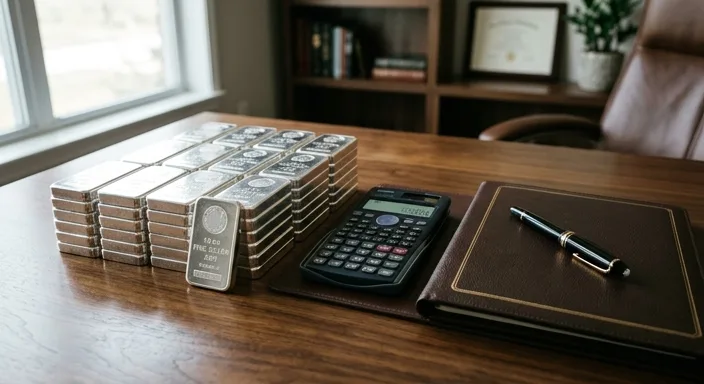
The Pros: Safety, speed, and simplicity. You don't have to deal with dozens of individual shipments or the risk of "chargebacks" or scams common in private marketplaces.
The Cons: You will generally receive a lower price per ounce. Dealers must account for their overhead, market volatility, and the cost of holding your inventory until it sells.
Negotiation Tip: Never accept the first "buy-back" price quoted on a website for a large lot. If you are selling more than 500 ounces, call the dealer directly. Ask for a "bulk volume premium." Dealers are often willing to shave their margin to secure a large, high-quality inventory in one go.
Selling to Private Buyers: Chasing the High Premium
Private buyers are typically individual collectors or investors looking to bypass retail markups. You can find them through forums, local investment clubs, or peer-to-peer marketplaces.
The Pros: You can often capture the full "spot plus premium" value. If Silver Eagles are retailing for spot + $7, a dealer might offer spot + $1. A private buyer might happily pay spot + $4, leaving both of you better off.
The Cons: Fragmented sales. It is rare to find a single private buyer capable of purchasing a large portfolio. This means managing multiple transactions, shipping dozens of packages, and vetting buyers to avoid fraud.
Negotiation Strategies for Large Portfolios
Negotiating for a large lot requires a different approach than selling a single 10oz bar. Here is how to gain the upper hand:
- The Inventory Sheet: Create a professional, itemized spreadsheet. List the year, mint, condition, and quantity. A well-organized seller signals that they know the value of their holdings, which discourages low-ball offers.
- Get Multiple Quotes Simultaneously: Contact three major dealers within a two-hour window. Since spot price moves constantly, you need "locked" quotes that are comparable. Use the highest quote as leverage against the others.
- Highlight "Liquid" Assets: If your portfolio contains highly desirable items (like government-minted coins), use them as bait. Tell the buyer, "I have 500 Silver Eagles I can sell you, but only if the price on these generic 100oz bars is fair."
- Ask About "Locked-In" Pricing: Ensure the buyer will lock the price the moment you agree, rather than waiting for the silver to arrive at their facility.
Hidden Costs: Shipping, Insurance, and Risk
A higher offer isn't always a better deal. When selling a large silver portfolio, logistics are expensive. Silver is heavy. Shipping 1,000 ounces of silver requires specialized heavy-duty packaging and high-value insurance (Registered Mail via USPS is often the only viable way for individuals to insure high-value bullion).
When comparing a local dealer offer to an online or private buyer offer, calculate the net return. If a local shop offers $0.50 less per ounce but saves you $400 in shipping and insurance costs—and eliminates the risk of a package getting lost—the local deal is often superior.
Timing Your Exit Strategy
Negotiation is also about timing. In a "tight" market where physical silver is scarce, dealer premiums skyrocket. This is when you have the most leverage. If you see retail dealers showing "out of stock" on popular items, you should be demanding prices well above spot. Conversely, in a stagnant market with high inventory, you may have to settle for closer to the bid price.
Frequently Asked Questions
Absolutely not. Cleaning coins can significantly reduce their numismatic value and may lead dealers to offer "cull" prices. Most bullion buyers care about weight and purity, not shine.
For dealers, a bank wire is the gold standard. For private sales, use a secure method like an escrow service or, for local meetups, a bank lobby where you can verify a cashier's check or receive cash safely.
While we aren't tax professionals, generally, the sale of precious metals is subject to capital gains tax. Dealers are also required to file Form 1099-B for specific quantities of certain items (like 1,000 ounces of silver bars). Always consult a CPA.