How to Liquidate Investment-Grade Silver: A Free Guide for Large-Scale Holdings
Jump to Section
Acquiring physical silver is often the easy part of the investment cycle. The true test of a sophisticated investor lies in the liquidation strategy. When dealing with large-scale holdings—defined as positions exceeding 500 ounces of silver coins or several 1,000-ounce bars—the standard "local coin shop" approach often fails to provide the necessary security, price transparency, or logistical support.
This guide outlines the professional protocols for offloading substantial silver positions while minimizing slippage and ensuring total regulatory compliance.
Understanding Market Liquidity for Silver Investors
Liquidity refers to how quickly an asset can be converted into cash without affecting its market price. For silver investors, liquidity is highly dependent on the form of the silver held. Investment-grade silver generally includes:
- Sovereign Minted Bullion (e.g., American Silver Eagles, Canadian Maple Leafs)
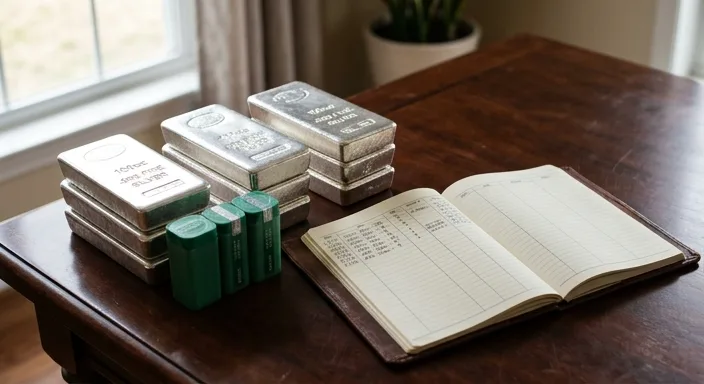
- Hallmarked 100oz or 1,000oz Bars (e.g., Johnson Matthey, PAMP, Royal Canadian Mint)
- 90% "Junk" Silver (Pre-1965 U.S. coinage)
Large holdings require a deep understanding of the bid-ask spread. When you sell a massive quantity, you are moving from a retail participant to a market-maker position. The goal is to find a counterparty capable of absorbing the volume without requiring a massive discount below the spot price.
Preparing Your Silver Assets for Sale
Professional buyers reward organization. Before reaching out to potential liquidators, you must audit your inventory. This includes creating a detailed manifest that lists:
- Exact weight and purity of each unit.
- The mint or refiner.
- Condition (Brilliant Uncirculated, circulated, or damaged).
- Original purchase documentation (for cost-basis calculations).
Do not clean your silver. This is the most common mistake made by large-scale holders. Any chemical cleaning or abrasive scrubbing can significantly reduce the numismatic or secondary market value of minted coins, even if they are primarily valued for their silver content.
Evaluating Institutional vs. Private Sales Channels
When liquidating six-figure silver positions, you have three primary paths:
- Wholesale Bullion Dealers: Companies like Apmex, JM Bullion, or SD Bullion have "buyback" departments. They offer high liquidity but may have strict shipping requirements and fixed margins.
- Private Treaty Sales: For extremely large positions (millions of dollars), a private sale to another high-net-worth individual or a private equity fund may yield a price closer to spot, as it bypasses the dealer spread.
- Auction Houses: Best for "semi-numismatic" holdings where the value is significantly higher than the spot price. Note that auction fees can eat 10-20% of the gross proceeds.
For most investment-grade holdings, a direct sale to a national wholesaler is the most efficient balance of speed and price.
Managing Logistics and High-Value Security
The physical movement of silver is the highest-risk phase of liquidation. A standard 500-ounce monster box weighs approximately 40 lbs. If you are moving 5,000 ounces, you are dealing with 400 lbs of highly concentrated value.
For large-scale transfers, avoid standard postal services even if they offer insurance. Consider armored transport services such as Brink’s, Loomis, or Malca-Amit. These firms provide door-to-door security and specialized insurance coverage that covers the full replacement value of the metal from the moment it leaves your possession.
If shipping via FedEx or UPS using a dealer's corporate account, ensure you have a "Registered Mail" equivalent receipt and that the contents are double-boxed with no audible "clink" of metal.
Tax Compliance and Reporting Requirements
Liquidation is a taxable event. In the United States, physical silver is considered a "collectible" by the IRS, regardless of its form. This means long-term capital gains are capped at a 28% rate, rather than the standard 15-20% for stocks.
Be aware of IRS Form 1099-B. Dealers are required to report certain sales. For silver, reporting is typically triggered by the sale of 1,000 troy ounces of silver bars or 90% silver coins with a face value of $1,000 or more. Always consult with a tax professional specializing in physical assets to ensure your cost basis is correctly calculated to minimize your tax liability.
Frequently Asked Questions
The New York (COMEX) open and the London fix are periods of high volatility. For large liquidations, many investors prefer to lock prices during the mid-afternoon Eastern Time when the market has stabilized, or they use an "average price" agreement with the buyer.
Typically, you will receive a percentage just below spot (the "bid" price) for bars and generic rounds. For sovereign coins like American Eagles, you may receive a small premium above spot, though this premium has compressed in recent years.
Yes, but you cannot take physical possession. You must instruct your IRA custodian to sell the metal to an authorized dealer. The proceeds will remain within the tax-advantaged shell of the IRA.