Navigating the Secondary Silver Market: A Step-by-Step Guide to Secure Bulk Transactions
Jump to Section
For the serious investor, the secondary silver market represents the ultimate frontier for maximizing value. Unlike the primary market—where you buy freshly minted products directly from government or private refineries—the secondary market involves the purchase of silver that has been previously owned. This market includes everything from vintage bars and circulated "junk" silver to modern bullion coins sold by private individuals or liquidated by estates.
While the rewards of secondary market trading include lower premiums and access to rare items, the risks—ranging from counterfeit products to insecure transaction methods—are significantly higher. This guide provides a strategic roadmap for navigating bulk silver transactions with confidence and security.
Understanding the Secondary Silver Market
The secondary silver market is often where the most liquid "deals" are found. Because these items have been handled or stored previously, they may lack the pristine finish of a new mint-state coin. However, silver is silver; the intrinsic value of the metal remains unchanged regardless of whether the bar was cast in 1975 or 2024.
Common items in this market include:
- 90% Silver Coinage: Pre-1965 US dimes, quarters, and halves (often called "Junk Silver").
- Generic Rounds and Bars: Bullion produced by private mints (e.g., Engelhard, Johnson Matthey).
- Sovereign Coins: Silver Eagles, Maples, or Britannias that are being resold.
Identifying Reputable Sourcing Channels
When dealing in bulk lots—defined typically as transactions exceeding 100 ounces—the source is your first line of defense. Not all secondary market channels are created equal.
Online Bullion Dealers: Many major retailers have a "Secondary Market" category. These are typically the safest entry points because the dealers have already verified the metal. However, you will pay a slightly higher premium for this peace of mind.
Local Coin Shops (LCS): Building a relationship with a local dealer can lead to "backdoor" deals on bulk lots. Since they avoid shipping costs, they can often offer competitive buy/sell spreads.
Private Peer-to-Peer (P2P) Sales: Platforms like Reddit’s r/pmsforsale or specialized forums offer the lowest possible premiums. However, they require the highest level of due diligence. Always check seller "feedback" or "flair" scores before engaging in a bulk transaction.
Decoding Pricing and Secondary Market Premiums
In the primary market, premiums are relatively static. In the secondary market, they are highly fluid. When buying bulk silver lots, you should aim for a premium that is significantly lower than new-minted counterparts.
For example, if a new Silver Eagle carries a $7.00 premium over spot, a secondary market Silver Eagle might only carry a $4.00 to $5.00 premium. When buying generic bulk lots (bars or rounds), your goal should be to get as close to the "spot price" as possible, sometimes even landing within $1.00 to $1.50 per ounce over spot for large quantities.
Verification: Protecting Your Capital
Security is the cornerstone of bulk transactions. You must never assume a secondary market lot is authentic based on appearances alone. Professional counterfeiters are increasingly sophisticated, often using silver-plated tungsten or lead cores.
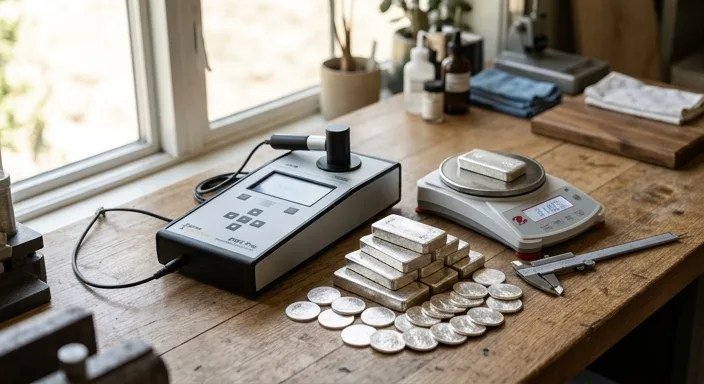
To secure a bulk transaction, implement the following verification protocol:
- The Ping Test: High-purity silver has a distinct, long-lasting ring when struck. Use a mobile app designed for "ping testing" to verify the frequency.
- Weight and Dimensions: Use a digital scale (accurate to 0.01g) and digital calipers. Counterfeits are almost always thicker or wider than genuine coins because silver is denser than most base metals.
- The Magnet Test: Silver is diamagnetic. If a strong neodymium magnet sticks to your silver, it is fake. If it slides down a bar slowly, it’s a positive indicator (but not definitive).
- Sigma Metalytics: For bulk investors, a Sigma Metalytics Precious Metal Verifier is the gold standard. It uses electromagnetic waves to verify the metal's purity through plastic flips and capsules without damaging the coin.
Logistics and Secure Transaction Methods
How you move the metal is just as important as what you buy. For bulk silver, the weight becomes a major logistical hurdle. A 500-ounce "Monster Box" of silver weighs approximately 35 pounds.
Shipping: If buying online, ensure the seller uses Registered Mail or a private insured carrier like Brinks. Standard USPS Priority mail is often insufficient for high-value bulk lots unless specifically insured through a third-party provider.
Payment: Avoid "non-refundable" methods like Friends & Family PayPal when dealing with new sellers. Use services with buyer protection or, for very large deals, a bank wire only after the seller's identity has been verified. For P2P transactions, escrow services are highly recommended for first-time bulk deals.
Taxation and Legal Reporting Requirements
In the United States, the IRS treats silver as a "collectible." When you sell silver from the secondary market for a profit, you are technically liable for capital gains tax. Furthermore, certain bulk transactions trigger a Form 1099-B from the dealer if you sell back more than 1,000 ounces of certain types of silver (like bars or rounds).
Always maintain a detailed ledger of your "cost basis"—the price you paid, including shipping and premiums—to ensure you only pay taxes on actual gains, not the total transaction volume.
Frequently Asked Questions
Is secondary market silver less valuable than new silver?
No. Silver is an element. An ounce of .999 fine silver in a secondary market bar has the same melt value as a brand-new bar. The only difference is the aesthetic condition and potentially the resale premium.
What is 'Junk Silver' and why is it popular in bulk?
Junk silver refers to pre-1965 US coins containing 90% silver. It is popular because it is recognizable, divisible, and has a built-in "trust" factor as official government coinage, making it easy to trade in the secondary market.
How do I avoid getting scammed in P2P silver trades?
Only trade with individuals who have established reputations. Use "middlemen" services offered by major silver forums, and never pay via methods that offer no recourse unless you have the metal in hand or have a long-standing relationship with the seller.